ECOEI Video Series on Common Cultural Heritage

The ECO Educational Institute proudly launches an educational documentary series which presents the historical foundations of cooperation, innovation, and cultural continuity across the ECO region, strengthening awareness of our shared past and collective future.

ECOEI Video Series on Common Cultural Heritage
02 March 2026

ECOEI Series on Common Cultural Heritage is an educational video series exploring major historical and cultural sites within the countries of the Economic Cooperation Organization (ECO). The series examines how interconnected societies shaped one another across millennia — from the Neolithic age to early modern empires.

Developed in collaboration with the Ankara University Digital Education Center, each episode presents a UNESCO World Heritage Site or a landmark of regional importance, demonstrating how the ECO region has long functioned as a zone of connectivity between continents.

The Eurasian landmass has historically been one of the most dynamic zones of cultural transmission in human history.

Long before modern political boundaries, trade routes, diplomatic exchanges, religious movements, and technological innovations moved across the regions, creating layered civilizations whose influence extended far beyond their immediate geography.

This series seeks to:

  • Highlight the shared historical foundations of the ECO region

  • Present interconnected narratives rather than isolated national histories

  • Promote awareness of common cultural heritage

  • Engage younger audiences with accessible, research-based storytelling

  • Support regional dialogue through heritage literacy

Featured Episodes

Göbekli Tepe

The World’s First Temple?
A revolutionary Neolithic site that challenges conventional narratives about the origins of civilization and organized belief systems.

Çatalhöyük

The First Urban Experiment
One of the earliest known settlements in human history, redefining what a “city” meant 9,000 years ago.

Troy

An Anatolian Legacy in Eurasian History
A Bronze Age city that controlled access between Asia and Europe and stands at the intersection of myth and archaeology.

Selimiye Mosque

The Masterpiece of Mimar Sinan
A pinnacle of Ottoman architectural achievement and geometric harmony, symbolizing scientific precision and spiritual expression.

The Wooden Mosques of Anatolia

A Hidden Architectural Tradition
Sacred timber structures reflecting regional craftsmanship and structural ingenuity.

Arg-e Bam

The Largest Adobe City on Earth
A monumental desert citadel along the Silk Road, embodying resilience and continuity.

Naqsh-e Jahan Square

The Square That Shaped an Empire
A Safavid urban masterpiece integrating governance, commerce, faith, and public life.


Shushtar Historical Hydraulic System

Ancient Engineering Excellence
A 2,000-year-old water management system demonstrating advanced technological knowledge in arid landscapes.


Video Gallery

Educational Videos

Naqsh-e Jahan: The Square That Shaped an Empire

Naqsh-e Jahan Square in Isfahan is one of the largest and most magnificent public squares ever built. Constructed during the Safavid era, it brought together royal authority, commerce, religion, and public life in one monumental space. Surrounded by the Shah M...

Arg-e Bam: The Largest Adobe City on Earth

Arg-e Bam in southeastern Iran was once the largest adobe city in the world and a major center along the Silk Road. Dating back over 2,000 years, this vast mudbrick citadel demonstrates advanced urban planning and desert architecture. Despite the devastating earthq...

Shushtar: The Ancient Engineering Wonder of Persia

Two thousand years ago, engineers in ancient Persia built a hydraulic system so advanced it still functions today. The Shushtar Historical Hydraulic System combines dams, canals, tunnels, and water mills in an extraordinary feat of engineering. It transform...

Selimiye Mosque: The Masterpiece of Sinan

The Selimiye Mosque in Edirne is considered the architectural masterpiece of Mimar Sinan and one of the greatest achievements of Ottoman architecture. Completed in 1575, its monumental dome, precise geometry, and structural harmony demonstrate extraordinary engineer...

Troy: The Anatolian Legacy in Eurasian History

For centuries, Troy was considered only a legend told in Homer’s Iliad. Today, archaeology reveals a powerful Anatolian city at the crossroads of Eurasia. Located on the Asian shore of the Dardanelles, Troy controlled strategic trade routes between Asia and Eur...

Gobeklitepe: The World’s First Temple

Göbeklitepe is considered the world’s oldest known temple, dating back over 12,000 years. Located in southeastern Anatolia, this UNESCO World Heritage Site challenges everything we thought we knew about the origins of civilization. Built long before writing, pottery, or...

The Wooden Mosques of Anatolia: A Hidden Architectural Miracle

Can an entire mosque be built on wooden pillars — and survive for centuries? The historic wooden mosques of Anatolia reveal a unique architectural tradition shaped by craftsmanship, structural innovation, and artistic carving. Massive wooden col...

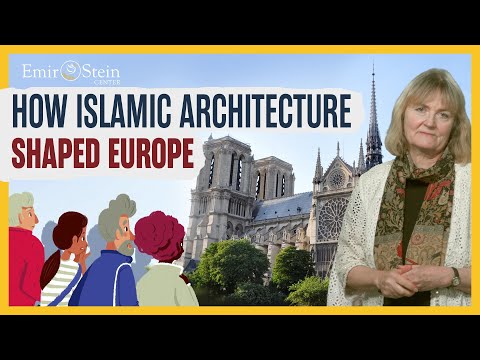
Islamic Legacy in European Cathedrals: Tracing the Influence of Islamic Art and Architecture in Europe

Europeans borrowed various architectural techniques from the Middle East, which significantly influenced their architectural styles. Here are some of the techniques they adopted: Pointed Arches: The pointe...